
My Ex Viewed My LinkedIn Profile During No Contact: What It Actually Means
Do not message your ex because they viewed your LinkedIn profile. A profile view is a low-information click, not a private conversation. It confirms that their account appeared in your visitor list. It does not confirm that they miss you, want to reconcile, or are waiting for you to make the first move. No message, email, or clear invitation means no new relationship conversation has actually happened.
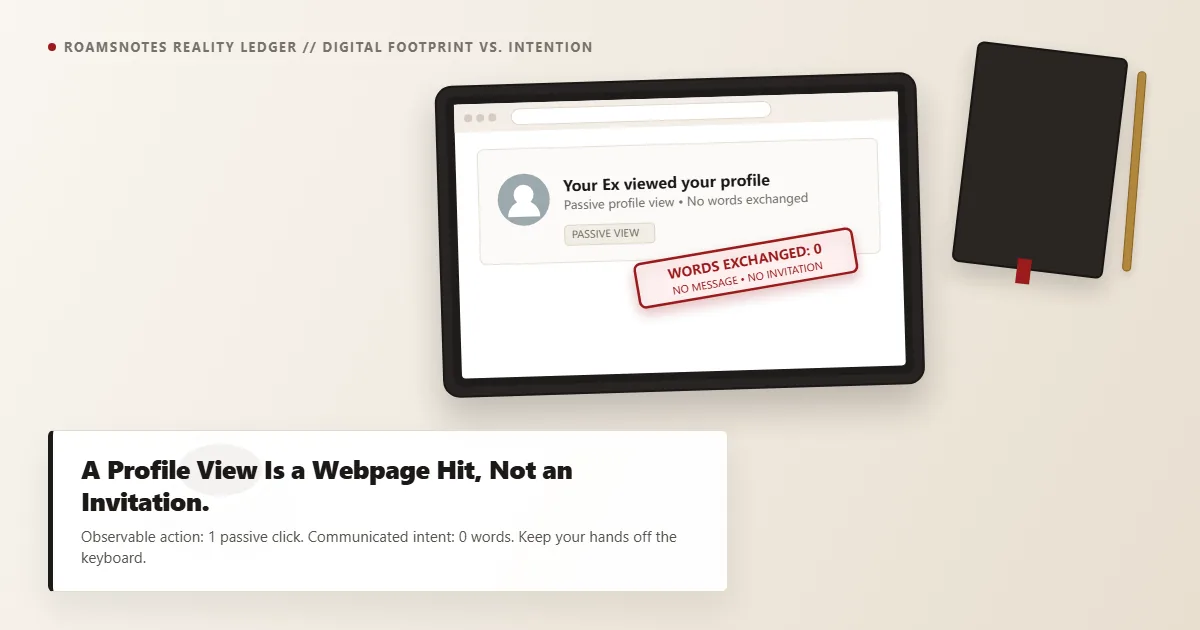
The LinkedIn view is real. The meaning you added is not yet evidence.
This is the part that feels insulting to the nervous system: you saw something. You did not invent the notification. Your ex may genuinely have clicked your profile.
But the click and the story are two different objects.
The click is observable:
- their account appeared in the visitor list;
- it happened during no contact;
- there was no direct message attached to it.
The story is unconfirmed:
- they are secretly checking whether you have moved on;
- they want you back but are too proud to say it;
- they are testing whether you will break no contact;
- they are watching your career because they still love you.
Maybe one of those stories is true. You do not have enough information to know which one. That is not a mystical puzzle. It is a missing-data problem wearing a nice little business-networking website as a disguise.
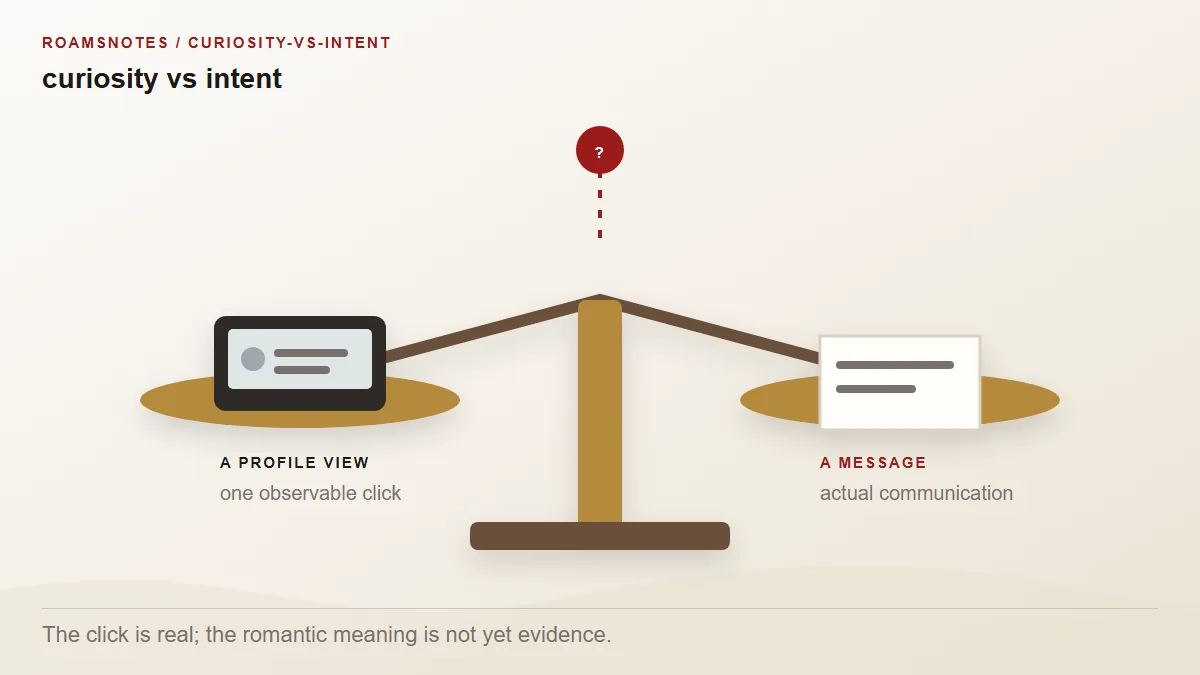
A profile view can come from curiosity, a search result, a suggested connection, a shared professional context, an old contact list, or a moment of boredom. It can also come from romantic curiosity. The record itself does not tell you which.
So keep the conclusion at the size of the evidence:
They looked. They did not communicate.
That is the complete fact pattern for now.
If the signal you noticed is an unblock rather than a message, use the same rule in what an unblock does—and does not—mean. If it is a practical need that genuinely requires contact, keep it as separate as a belongings request during no contact, not as a disguised relationship check.
Why LinkedIn makes the signal feel more important than it is
A story view on Instagram is easy to dismiss as passive scrolling. LinkedIn feels more deliberate because it is associated with work, names, job titles, and an actual profile page. Your brain sees the professional setting and thinks, “They had to search for me.”
Maybe they did. That still does not turn a click into a declaration.
People click profiles for stupidly ordinary reasons. They see a name in a suggested connection. They recognise an old partner and become curious. They check where someone works. They compare themselves. They look for a photo. They click the wrong result. They are procrastinating before a meeting and suddenly become an unpaid investigator of their own past.
None of these explanations gives you a safe reason to contact them.
The question that protects you is not:
“What were they secretly feeling when they clicked?”
It is:
“What direct action did they take toward me?”
If the answer is “none,” do not volunteer the missing action on their behalf.
The evidence ladder: what would actually change the decision?
Not every sign deserves the same weight. Put the event on an evidence ladder instead of letting your imagination promote it to the top floor.
Level 1: Passive visibility
They viewed your profile, watched a story, liked an old post, or appeared in a suggested connection.
This tells you that a digital trace exists. It does not establish intent, readiness, accountability, or a plan.
Level 2: Direct but vague contact
They send “Hey,” react to a post, or ask a small question with no clear purpose.
Now there is contact. There is still not enough evidence of repair. A message is not automatically an apology, a plan, or a changed person.
Level 3: Clear communication
They state why they are contacting you, ask a direct question, acknowledge what happened, or propose a specific conversation without making you drag every honest sentence out of them.
This is more meaningful because it is actual communication. You can evaluate the words and the pattern instead of reverse-engineering a click.
Level 4: Consistent action
They follow through, take responsibility for specific behavior, respect your boundaries, and show change over time.
This is where trust gets rebuilt—if it is going to be rebuilt at all. A LinkedIn view is not even close to this level.
Do not use the emotional weight of your history to inflate the evidential weight of one profile visit. Your history may be enormous. The click is still one click.
Should you view their LinkedIn profile back?
You can. You probably should not do it as a test.
A retaliatory profile view is not communication. It is a tiny flare shot into the sky that says, “I saw your move and I am now playing.” Then you will wait to see whether they look again, notice your new headline, change their photo, or somehow decode your silence.
That is not a strategy. That is a surveillance loop with a résumé attached.
If you genuinely need to view their public profile for a professional reason, do what you would do for any other person: decide what information you need, look once, and leave. Do not turn the visit into a covert conversation.
If the only reason you want to click is to make them wonder whether you are wondering, stop. You already know where that road goes. It ends with you checking the visitor list again in twelve minutes.
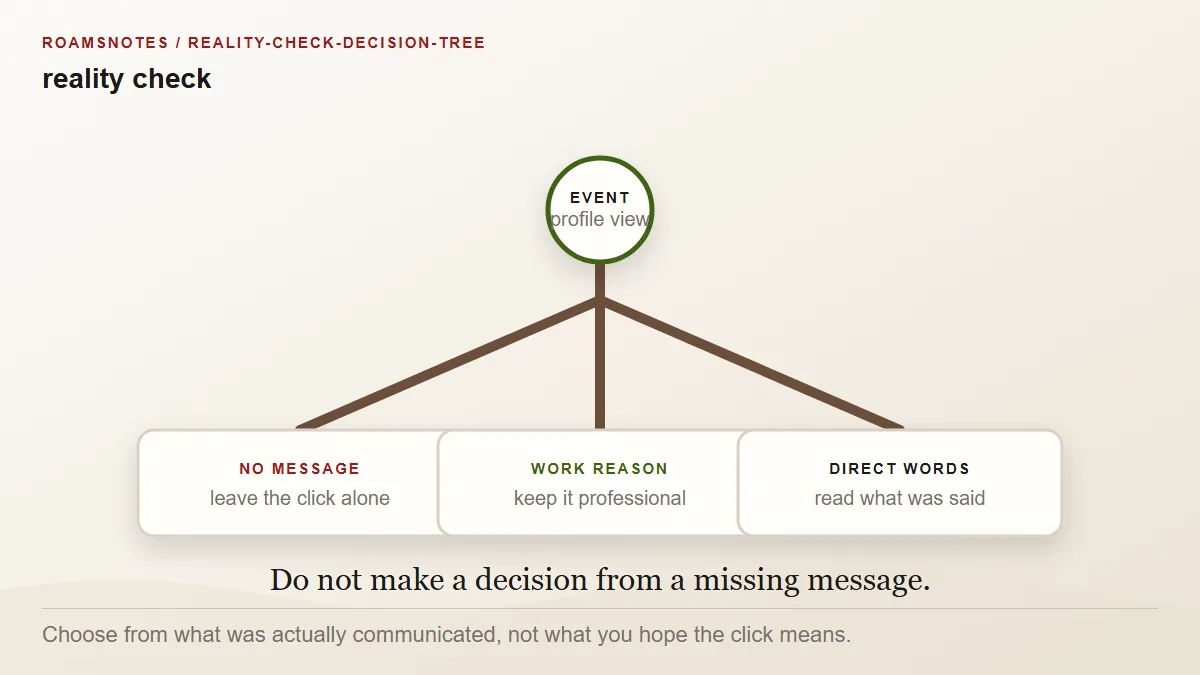
The three messages you should not send
1. “Did you view my LinkedIn?”
This sounds like a request for clarity. Usually it is a request for reassurance wearing a fake moustache.
It also tells your ex that you are monitoring the visitor list and are ready to turn a passive click into an emotional negotiation. If they say yes, you still do not know why. If they say no, you are left arguing with a notification. Neither outcome gives you dignity or useful information.
2. “I saw you checking up on me.”
This is an accusation built on an interpretation. It invites denial, defensiveness, or a smug little back-and-forth about who looked at whom.
You are not asking for a relationship. You are asking two adults to litigate a profile view. Put the phone down.
3. The disguised life update
“I’ve been doing really well at work, by the way.”
“Hope everything is good with you too.”
“I just remembered that project we talked about.”
These messages are not neutral. They are bait. You are hoping the other person will bite hard enough to reveal a feeling you are too scared to ask about directly.
If you have a real practical reason to contact them, state that reason plainly. If you do not, do not manufacture one from a LinkedIn notification.
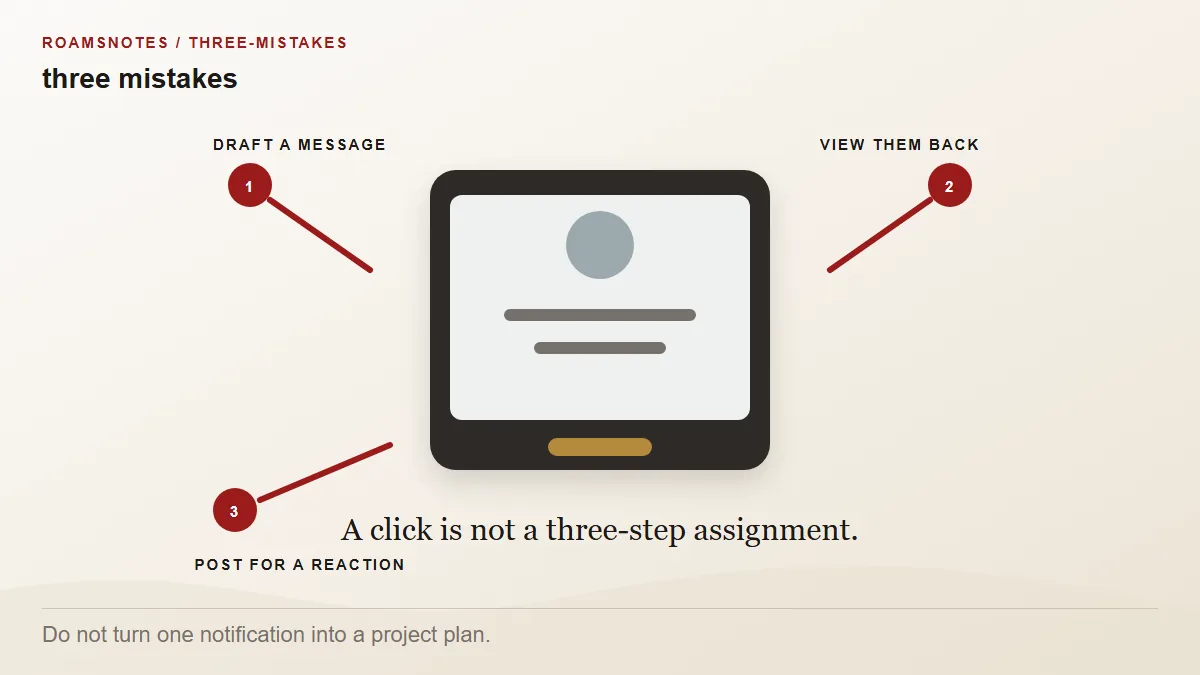
Use a 24-hour pause before you decide anything
The first few minutes after seeing the view are not your best decision-making window. Your brain wants to convert uncertainty into movement. Any movement will do: a message, a profile visit, a strategic post, a new headline designed to look unbothered.
Give the impulse a boring job instead.
- Write down the exact fact. “My ex’s account appeared in my LinkedIn visitor list.”
- Write down the prediction. “They want me back.”
- Mark the prediction as unconfirmed. Do not promote it just because it feels vivid.
- Wait 24 hours before visiting their profile or sending anything.
- Ask whether you would take the same action if you had never seen the visitor notification.
If the answer is no, the notification is driving the car. Take the keys back.
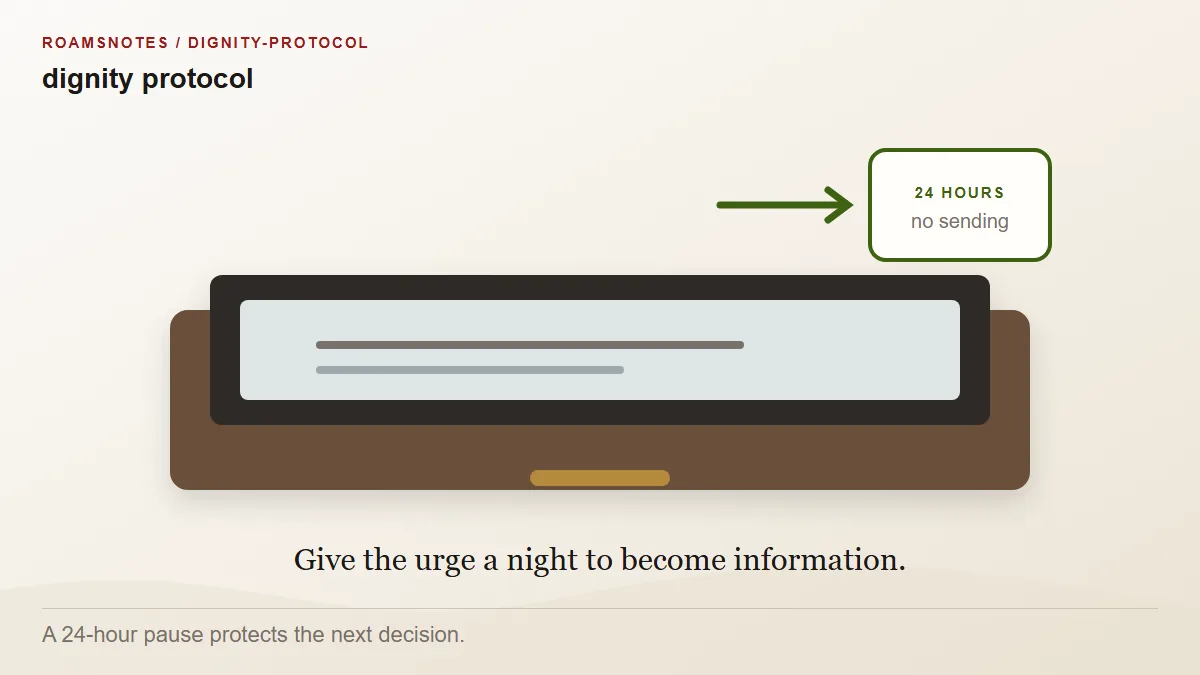
During the pause, change the environment that keeps feeding the loop. Close LinkedIn. Turn off visitor notifications if they make you check compulsively. Put the draft message somewhere you cannot send it with one thumb. Go for a walk that is long enough for your body to catch up with your imagination.
You do not need to feel perfectly calm. You only need to stop making a permanent social move from a temporary spike.
What if you work in the same field?
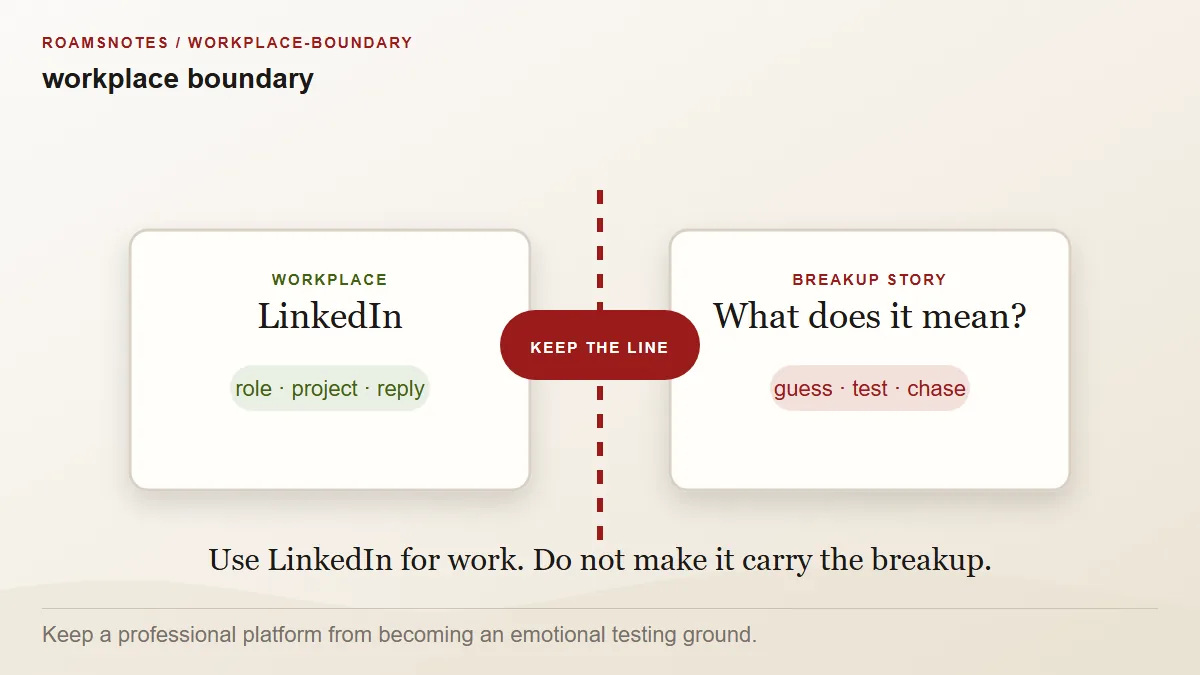
LinkedIn can contain a real professional reason to stay connected. You may share an industry, a client, a former workplace, a conference, or a network of mutual contacts. That is exactly why you should keep the boundary clean.
Do not use professional access to sneak around an emotional boundary. Do not post a résumé update as a coded message. Do not send a networking note that is secretly a breakup conversation. Do not turn a shared professional network into a stage where both of you perform being fine.
If work requires contact, keep it specific and professional:
- name the project or opportunity;
- ask one necessary question;
- use a normal professional tone;
- do not reference the profile view;
- do not add emotional history to a work thread;
- end the exchange when the practical issue is resolved.
If work does not require contact, let the profile view remain what it is: a piece of digital noise you noticed and chose not to obey. If you are also caught in the loop of an ex watching your stories but not texting, do not count two passive signals as one direct conversation.
The self-respect test
Before you contact your ex, answer these questions without performing for yourself:
- What exact outcome am I asking for?
- Would I send this message if I knew they would reply politely but not romantically?
- Can I handle no reply without sending another message?
- Am I contacting them because there is a real shared obligation, or because I want the uncertainty to stop?
- Is this action consistent with the boundary I chose when no contact began?
If your plan depends on them interpreting a hint correctly, it is not a plan. It is a gamble.
If your plan depends on a profile view meaning more than a direct message, it is not evidence. It is wishful accounting.
And if your plan is to make them jealous, curious, guilty, or afraid of losing you, be honest: you are not ready for a clean conversation. You are trying to control an outcome you cannot control.
What to do instead tonight
Do one small thing that gives the decision back to you:
- close the LinkedIn tab for the evening;
- write the message in a note and do not send it;
- remove the notification shortcut from your home screen;
- finish one task that has nothing to do with your ex;
- tell one trusted friend the fact, not the fantasy;
- use the free 3-Card Relationship Reflection to separate what you can observe, what you may be assuming, and what action is actually yours.
The cards cannot tell you why your ex clicked. The tool cannot read their mind. It can help you stop asking a dead notification to answer a living question.
If you are stuck in a loop of checking their profile, look, your LinkedIn notification is not going to become a therapist. A written tarot reflection can give you a structured way to process the uncertainty without pretending it can tell you what your ex was thinking. The useful part is the distance: sometimes another set of questions makes it harder to keep worshipping a profile view.
If your ex wants to communicate, they can communicate. If there is a real practical reason for contact, name it and handle it cleanly. Until then, you do not need to chase a click across the internet and call that closure.
The short verdict
Your ex viewing your LinkedIn profile during no contact means they viewed your LinkedIn profile. It may reflect curiosity. It may reflect a professional connection. It may reflect nothing more dramatic than a bored click.
It does not give you enough evidence to conclude that they want you back.
Do not message them about the view. Do not view them back as a test. Wait 24 hours, keep LinkedIn professional, and judge any future direct communication by its clarity and consistency—not by the story your brain wrote around a visitor notification.
Your job is not to decode every trace your ex leaves online.
Your job is to stop handing a stranger’s click control of your next move.